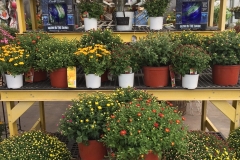
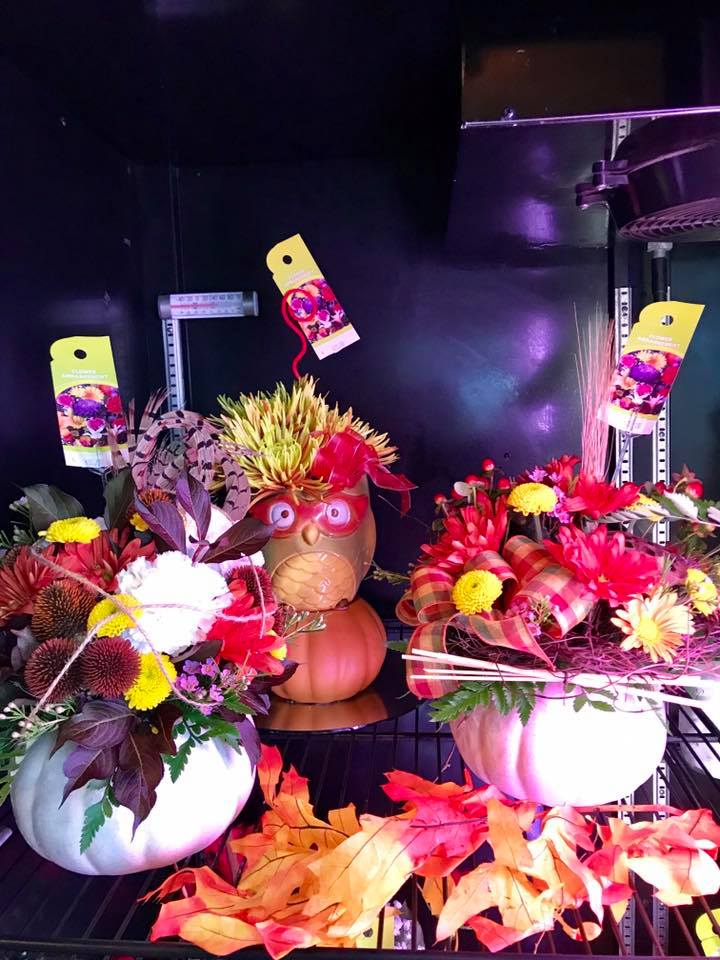
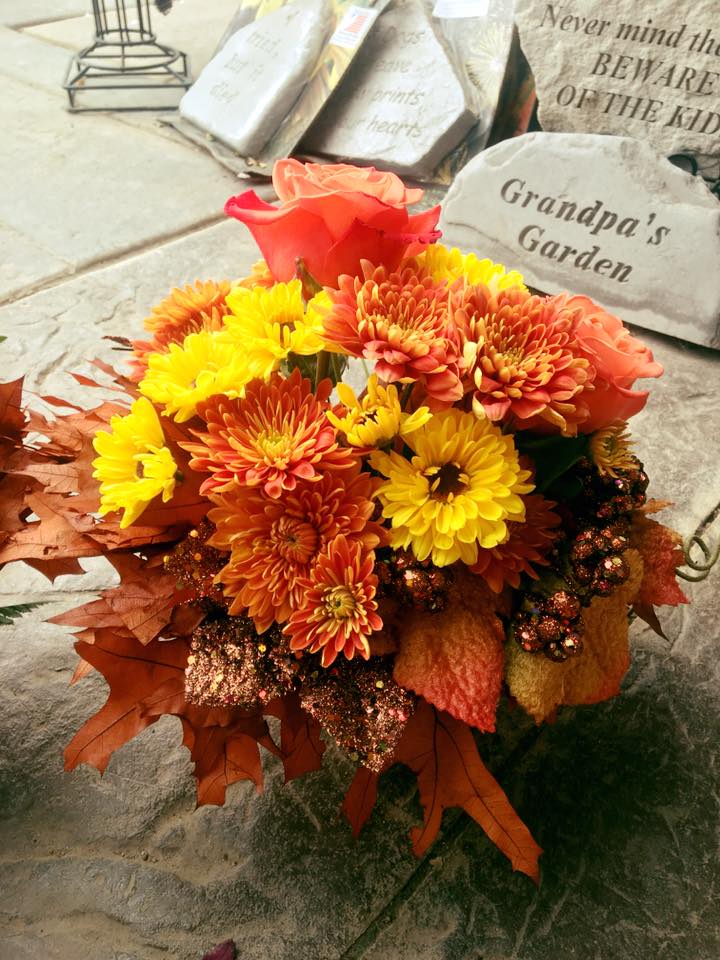
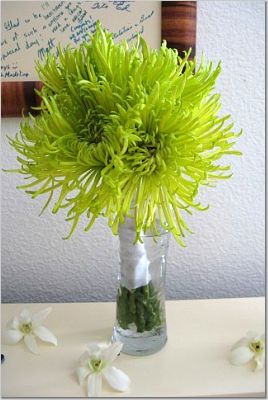

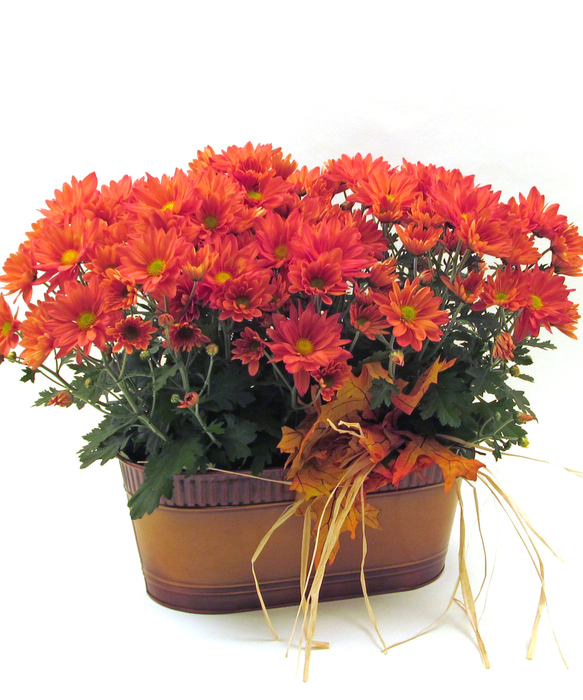
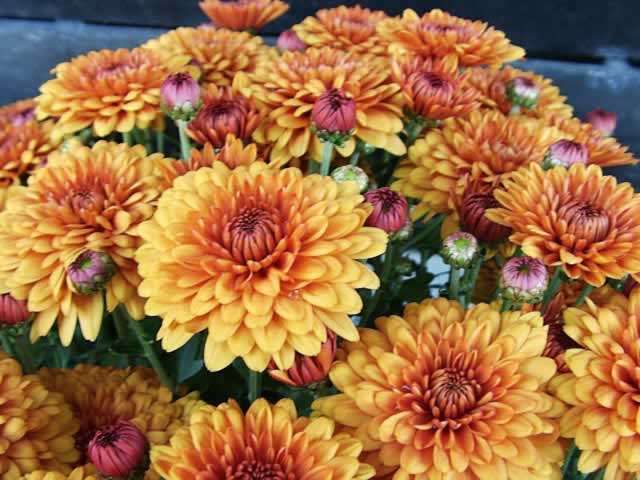
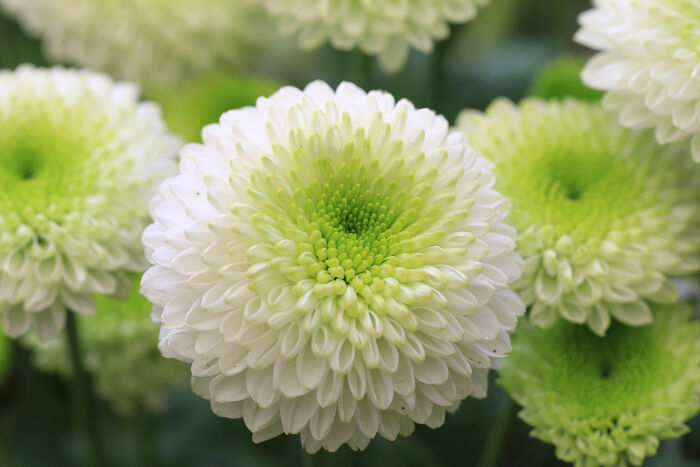
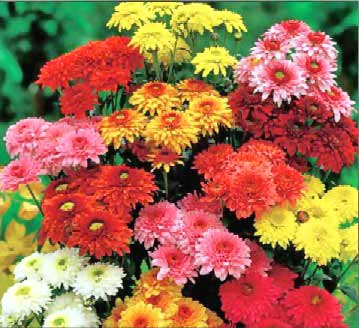
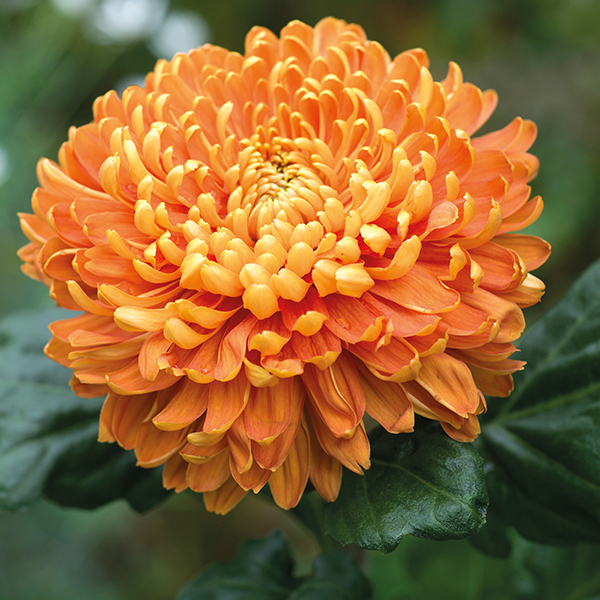

Chrysanthemums, sometimes called mums or chrysanths, are flowering plants of the genus Chrysanthemum in the family Asteracea. They are native to Asia and northeastern Europe. Most species originate from East Asia, and the center diversity is in China. They were first cultivated in China back in the 15th Century. Carolaus Linnaeus, a Swedish naturalist, named this flower using a combination of two Greek words, Chrys(gold) and Anthemon (flower) meaning golden flower. There are countless horticultural varieties and cultivars.
You most commonly see them as a blooming plant in the fall seasons. But as a fresh cut flower, we receive them all year long- colors and varieties vary from season to season. Chrysanthemums are some of the most popular flowers in the floral industry, standing just below roses, tulips and lilies. With around 13 types of this mighty bloom, the possibilities for floral designs are endless!
Chrysanthemums are most commonly used in funeral arrangements, as it still remains a symbol of grief. White mums with greens and other blooms, like lilies, express sympathy for the departure of someone dearly loved.
The cut flower is able to survive up to 2 weeks in a vase. Unfortunately, the leaves of this flower die faster, so removing them from the stem ensures a longer lifespan. According to some studies performed by NASA, florists mums help reduce air pollution. https://en.wikipedia.org/wiki/NASA_Clean_Air_Study
Watch for our blog next week when we discuss the florist variety mum and the garden mum.



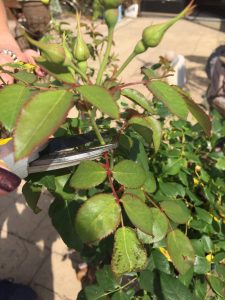
 Deadheading:
 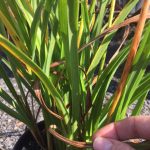 Daylily leaves frequently dry out, turn yellow, and/or flop to the ground. Easily remove dried-out foliage at the base of the plant with just a quick sweep of your hand. Cut away yellowing leaves with a hand-pruner. If your daylilies have flopped over, cut the foliage back to the desired height. For fall clean-up, cut all daylily foliage to 6 inches. Removing old foliage allows your daylilies to reserve energy for their roots for the winter and reduces the amount of work required for spring clean-up the following year.